
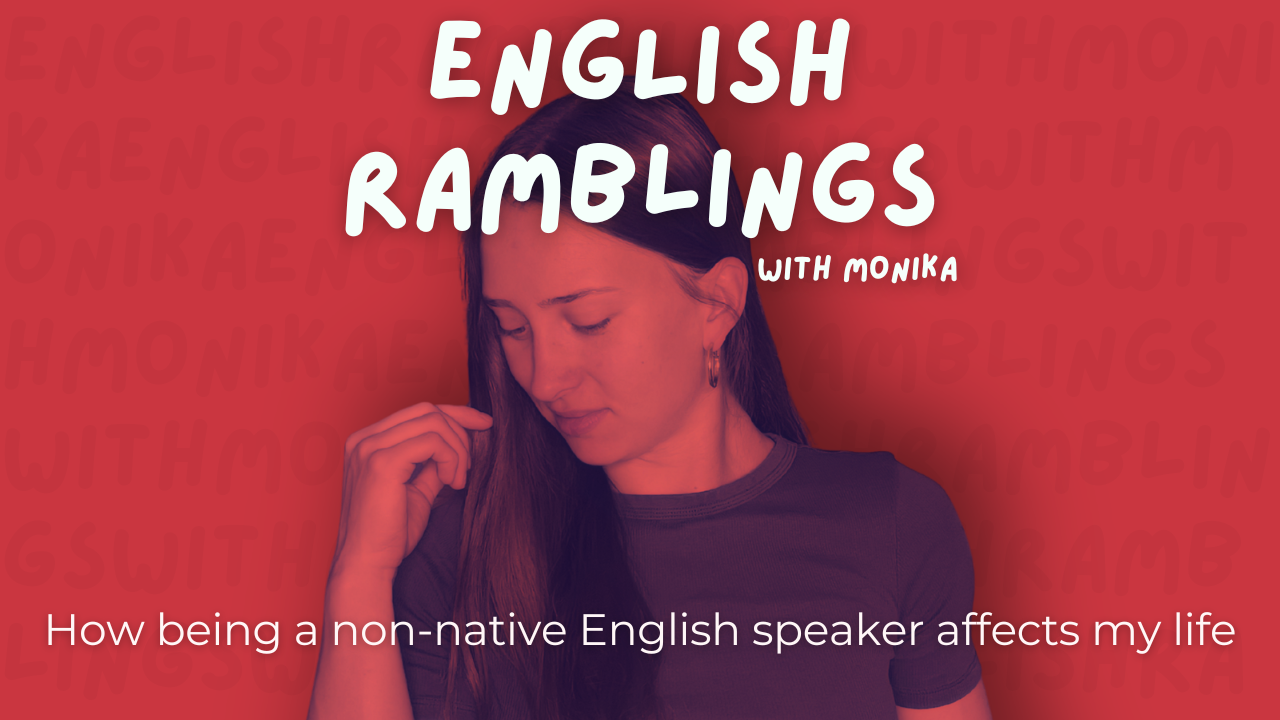
How being a non-native English speaker affects my life
For years, I wanted to learn English so badly that I slowly started consuming almost everything in that language.
At first it was just classes I didn’t enjoy, full of grammar rules that made no sense.
Later, when I got my first corporate job, English became something practical — a tool I actually needed to survive professionally.
As more online content became available, I convinced myself that spending hours watching and listening in English was productive, not procrastination.
And in many ways, it really did help me improve and opened doors to ideas, people, and opportunities I wouldn’t have discovered otherwise.
But only recently did I realize there was a trade-off: I had lost touch with parts of my own culture, trends, and public conversations in my country.
I knew more about international creators than local ones, more global topics than things happening around me.
Even now, after all those years, I still don’t feel like my English is as good as I once imagined it would be.
That’s the strange paradox of language learning — the more you learn, the more aware you become of what you still lack.
In the end, it’s not just about mastering a language, but deciding how much time and identity you’re willing to invest in it.